
Buttock enhancement in Turkey: three methods, one honest comparison.
Buttock enhancement is the umbrella term for surgical procedures that correct the volume or shape of the buttocks, or loose, sagging skin; fat transfer (the Brazilian butt lift, or BBL), silicone implants and a buttock lift are its three main methods. In this guide to buttock enhancement in Turkey, we set the options side by side, report the BBL safety warnings with their sources and explain what recovery is really like.
- Buttock enhancement is not a single operation: fat transfer adds volume and curves, implants provide volume for people who do not have enough fat, and a buttock lift tightens loose skin.
- Deaths after BBL are caused by fat embolism, which develops when fat is injected into the muscle; international professional societies require fat to be placed only under the skin (subcutaneously).
- Not all of the transferred fat survives; the American Society of Plastic Surgeons reports that on average 60–80% of it is permanent.
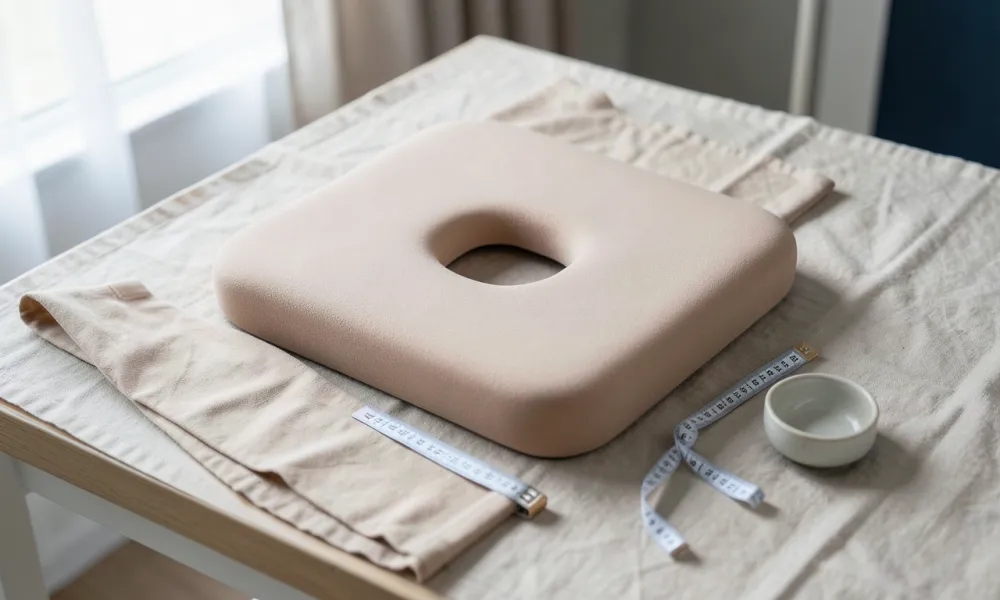
- After fat transfer you should not sit on your buttocks for at least two weeks; after that, a special cushion (a BBL pillow) is used for a while.
- A buttock lift does not enlarge the buttocks; it removes skin that sags after weight loss and leaves a scar.
- After buttock surgery the final shape settles over months; with fat transfer it can take up to a year to see the final result.
What is buttock enhancement?
Buttock enhancement is the name given to all surgical procedures that increase the volume of the buttock area, round out its shape or lift sagging tissue. In medicine it is known as gluteal aesthetic surgery. A different operation is chosen depending on whether the concern is a lack of volume or sagging skin.
On our BBL page we briefly introduced shaping with fat transfer. This guide looks at a broader question: for someone considering buttock enhancement, is fat transfer the only option, and if not, which method suits whom?
- Adds fullness to flat buttocks or buttocks lacking volume
- Defines the transition between the waist and the hips
- Lifts tissue that has sagged with weight loss or age
Buttock surgery does not strengthen the muscles or get rid of cellulite; its aim is proportion, not size.
Who is buttock enhancement suitable for?
Adults in good general health whose weight has been stable for a few months, who do not smoke and who can clearly explain what they expect from the result are suitable candidates for buttock enhancement. The method, however, is determined by your fat reserves and skin quality.
- People with fat that can be harvested from the abdomen, waist or thighs: candidates for fat transfer
- Slim people with limited fat reserves: implants may be considered
- People whose skin sags after significant weight loss: a buttock lift is needed
Cleveland Clinic lists completed physical development, good physical and mental health and realistic expectations as prerequisites for candidacy. In people with clotting disorders, uncontrolled diabetes or serious heart or lung disease, buttock enhancement is postponed or not recommended at all.
Gaining weight quickly to build up enough fat for a fat transfer also reverses the result when that weight is lost after the operation, because the transferred fat cells shrink along with the rest of the body. If you do not have enough fat, hearing that clearly is better than a forced plan.
What methods of buttock enhancement are there?
Buttock enhancement is carried out using three main methods: transferring the person's own fat (BBL), placing silicone implants and a buttock lift. The first two add volume; the third corrects sagging without adding volume. The American Society of Plastic Surgeons' buttock enhancement page also describes the procedures under these three headings.
| Method | What it does | Who it suits | Scar | Main limitation |
|---|---|---|---|---|
| Fat transfer (BBL) | Fat removed by liposuction is transferred to the buttocks | People with enough fat reserves | Entry points of a few millimetres | Some of the fat is reabsorbed; safety depends on technique |
| Silicone implants | A buttock-specific implant is placed within or above the muscle | Slim people without enough fat | Usually in the crease between the buttocks | Foreign body; risk of displacement and infection |
| Buttock lift | Loose skin and fat are removed and the tissue is lifted | Sagging after major weight loss | Long scar below the waist or in the lower buttock crease | Does not add volume |
The methods can also complement each other: the edges of an implant can be softened with a small amount of fat. With buttock enhancement, the right question is not “which is better?” but “which problem do I have?”
Why is BBL the buttock enhancement method with the most safety warnings?
Because when fat is injected into the wrong layer, it can enter the large veins in the buttock and travel to the heart and lungs; this is called fat embolism and it can be fatal. In 2018, an international task force that included ASPS, ASAPS and ISAPS issued an urgent safety advisory to surgeons.
The core of the advisory:
- At the time, the death rate was estimated to be as high as 1 in 3,000 operations, higher than for any other cosmetic operation
- In every autopsy of a patient who died, fat was found inside the muscle; no deaths were identified in which the fat was only under the skin
- Conclusion: fat must never be injected into the muscle and should be placed only in the subcutaneous tissue
- If the desired volume does not fit under the skin in one session, the procedure should be split into two rather than going deeper
- The risk of death and alternatives such as implants should be discussed with the patient as part of informed consent
A 2022 review by the society reports that, in surveys carried out after the technique changed, the rate fell to around 1 in 15,000, roughly the level of a tummy tuck. This figure is survey data based on surgeons' self-reporting; it does not mean the risk has been eliminated.
Which layer do you inject the fat into? How do you check that you are not entering the muscle? If the volume I want will not fit under the skin in one session, what do you suggest? Do not accept a buttock enhancement plan unless you hear a clear answer: “under the skin only”.
How is buttock enhancement done if I do not have enough fat?
In slim people with insufficient fat reserves, buttock enhancement is done with silicone implants. An implant made for the buttocks, firmer than a breast implant, is placed in a pocket created within or above the muscle on each side. The incision is usually hidden in the crease between the buttocks.
- Pros: the volume is predictable and is not reabsorbed; the result is visible straight after surgery
- Cons: you carry a foreign body; the implant can shift, fluid can collect around it, or it may need to be removed because of infection
- Limitation: an implant does not shape the sides of the hips or the waist transition; liposuction or a small amount of fat is needed for curves
With buttock implants, the incision lies in an area where hygiene is difficult, so wound care needs extra attention.
When is a buttock lift the right route for buttock enhancement?
If the problem is not volume but loose, sagging skin, the right procedure is a buttock lift. After weight-loss surgery or major weight loss, the skin cannot tighten by itself; adding fat or an implant to this tissue increases the sagging. In the words of ASPS, a classic buttock lift does not enlarge the buttocks, but it can improve uneven, dimpled skin.
- The incision is made just below the waistline or in the crease where the buttock meets the thigh
- An incision below the waist is often combined with a tummy tuck incision; this is covered in our tummy tuck guide in more detail
- It takes 3–6 months for the tissue to settle; the scar can take up to two years to mature
If a lift flattens the buttocks, volume can be rebalanced in a second stage by adding fat; this is why buttock enhancement after weight loss is often planned in stages.
How does the buttock enhancement process work?
- Remote preliminary assessment. Photos from the front, side and back, your height and weight and your medical history are reviewed; an initial opinion is shared on whether you have enough fat and which buttock enhancement method suits you.
- Examination and marking. The surgeon takes measurements while you are standing and marks the areas where fat will be removed and placed; blood tests and the anaesthetic consultation are completed. You can find an overview of the whole journey on our treatment process page.
- Surgery. The procedure is usually performed under general anaesthesia. In fat transfer, liposuction is carried out first; the fat is processed and then spread under the skin through fine cannulas.
- Observation. The first night is spent in hospital; you lie on your front or side and a compression garment is fitted.
- Hotel rest and check-up. You rest without putting pressure on your buttocks; after a dressing and compression garment check, you are cleared to fly.
- Remote follow-up. Check-ups continue by photo; how much of the fat has survived is assessed around the third month.
How long do buttock enhancement results last?
It depends on the method. With fat transfer, on average 60–80% of the transferred fat becomes permanent; the rest is absorbed by the body in the first months. The fat that survives is living tissue and lives with you: if you gain weight it grows, if you lose weight it shrinks. With implants the volume is constant, but the implant itself may not stay problem-free for life.
- The appearance straight after surgery is not the final result; swelling and fat that has not yet been reabsorbed make the volume look larger than it is
- The risk of fat loss decreases noticeably around the third month; between months 3 and 6 the shape slims down
- With fat transfer, it can take up to a year to see the final result
- Prolonged pressure on the buttocks in the early period reduces fat survival
Your surgeon allows for fat loss when planning the operation, but no one can guarantee in advance what percentage of the fat will remain.
How long is recovery after buttock enhancement?
After buttock enhancement with fat transfer, returning to work usually takes 10–14 days, depending on the type of work; full recovery takes two to three months. This timeline is based on Cleveland Clinic's patient information page. Recovery takes longer after implants and a buttock lift because of the incisions.
| Period | What happens | What to do |
|---|---|---|
| Days 1–3 | Pain, leakage and widespread swelling in the areas where fat was removed | Lying on your front or side, short walks, compression garment |
| First 2 weeks | Bruising and swelling at their most noticeable | No sitting or lying on your buttocks |
| Weeks 2–8 | Swelling goes down and moving becomes easier | Sitting only for short periods and only on a special cushion |
| Weeks 6–8 | Tissues recover | Gradual return to sport with surgeon approval |
| Month 3 | The portion of fat that has survived becomes clear | Follow-up assessment |
| Months 6–12 | The shape slims down and the result settles | Final assessment |
The first weeks after a BBL require serious planning for people with desk jobs. We explain how to care for the areas where fat was removed in our liposuction guide in detail.
How do you plan buttock enhancement in Turkey?
For patients travelling from abroad, a buttock enhancement programme usually lasts longer than a week; the reason is not the operation itself but the journey home. Sitting in an aircraft seat for hours puts strain both on the transferred fat and on the veins in your legs. The NHS advises waiting 5–7 days after liposuction before flying; with fat transfer, surgeons often keep this period longer.
- Your flight date is confirmed after the final check-up and the surgeon's approval
- An aisle seat, a sitting cushion and a plan to stand up frequently are arranged in advance
- For the transfer between the airport and the hotel, the journey is arranged so you can lie on your side on the back seat
Neda Deniz holds the Turkish Ministry of Health International Health Tourism Authorisation Certificate (AK-1032) and is an intermediary agency, not a clinic. All operations, including buttock enhancement, are performed by our partner specialist surgeons at the relevant hospitals; which surgeon you proceed with is confirmed after the preliminary assessment.
What determines the cost of buttock enhancement?
Turkish regulations do not allow price advertising for healthcare services, and giving a single figure under a heading that covers three separate operations would be misleading. When comparing buttock enhancement quotes, it is enough to look at the items that make up the cost. In the UK, the NHS generally does not fund cosmetic buttock surgery, so it is worth checking with your insurer if you are unsure.
- Method: fat transfer, implants or a lift; each differs in operating time and materials
- Number of areas treated with liposuction: abdomen, waist, back, thighs
- If implants are used: the implants themselves
- Hospital, anaesthesia and length of stay
- Compression garment, sitting cushion, accommodation, transfers and follow-up
In this operation, the places where savings can be made lie right at the heart of safety: performing the surgery in a small centre instead of a fully equipped hospital, having no anaesthetist, discharge on the same day. Ask for the quote to state in writing where the operation will take place, who will perform it and under what type of anaesthesia.
What are the risks of buttock enhancement?
Buttock enhancement is not risk-free, and fat transfer is one of the operations in cosmetic surgery that demand the most care. In Turkey, practice follows the Turkish Society of Plastic, Reconstructive and Aesthetic Surgeons guidelines. The risks need to be looked at separately for each method.
- Fat embolism: specific to fat transfer; rare but life-threatening; prevented by never injecting fat into the muscle
- Fat necrosis: fat that fails to survive leaving firm lumps or cysts
- Asymmetry and irregularities: fat being reabsorbed at different rates on each side; contour irregularities where fat was removed
- Seroma and bleeding: a build-up of fluid or blood
- Infection: may require removal of an implant
- Implant-specific problems: displacement, being able to feel the implant, hardening around it
- Deep vein thrombosis and pulmonary embolism: as with any major operation
- Scarring: permanent after a lift or implants
ASPS advises seeking medical help immediately if you experience shortness of breath, chest pain or palpitations after surgery; these symptoms are not something to wait out.
Other body contouring guides
The buttocks often need to be considered together with the waist, abdomen and legs. Guides we have written with the same transparency:
- Liposuction guide — liposuction techniques and limits
- Tummy tuck guide — three techniques and recovery
- Breast reduction guide — techniques, scars and breastfeeding
- Breast augmentation guide — implant choice and fat transfer
Making your decision
Three questions clarify a buttock enhancement decision: Is my problem volume, shape or sagging? Is my fat enough to achieve the change I want within safe limits? Can my work and home life cope with weeks of not sitting after surgery? The first question determines the method, the second your expectations and the third the timing.
Send us your photos and questions; our partner surgeons will review them, and we will explain clearly which buttock enhancement method suits you and what result is realistic. If the volume you want exceeds the safe limit, or if surgery is not right for you, we will tell you that too. On our BBL service page you can see how the process works on our side.
Frequently asked questions about buttock enhancement
Are buttock enhancement and BBL the same thing?
No. BBL is only one of the buttock enhancement methods and refers to transferring a person's own fat to the buttocks. Silicone implants and a buttock lift are different operations that fall under the same heading.
How much fat do you need for a BBL?
The exact amount is determined at the examination. You need a noticeable layer of fat that can be harvested from the abdomen, waist or thighs. In very slim people, fat transfer does not provide enough volume, and the implant option is discussed.
When can I sit down after a BBL?
After fat transfer, you should not sit on your buttocks for at least two weeks. After that, you sit for short periods using a special cushion; sitting without a cushion is usually possible after around eight weeks. Your surgeon will tell you the exact timing.
Is buttock enhancement permanent?
Fat that survives is permanent but responds to changes in weight. On average, 60–80% of the transferred fat remains. With implants the volume is constant, but the implant may need to be replaced or removed over the years.
Can exercise achieve the same result as buttock enhancement?
Exercise builds the gluteal muscles and improves posture, but it does not change fat distribution or bone structure. Nor does it tighten loose skin. If muscle development is enough for you, there is no need for surgery.
Does buttock enhancement get rid of cellulite?
No, it is not a cellulite treatment. Fat transfer can soften the appearance because it stretches the surface slightly, and a buttock lift can improve uneven skin; however, you should not expect cellulite to disappear completely.
Can buttock enhancement be combined with a tummy tuck?
It can be planned together in patients whose general health allows it. However, recovery is harder, because one operation makes lying on your back difficult and the other makes lying on your front difficult. Surgeons often recommend splitting the two procedures into separate stages.
Does pregnancy affect the result of buttock enhancement?
Pregnancy does not damage fat transfer or implants. Even so, the weight gained and lost during pregnancy can change the shape of the buttocks. If you are planning a pregnancy in the near future, it makes more sense to postpone the operation.
Can buttock enhancement be done a second time?
Yes. A second session can be planned if more fat has been reabsorbed than expected or if more volume is wanted. Professional societies also recommend a staged approach rather than forcing a large volume in a single session.
Are filler injections safe for buttock enhancement?
Injecting liquid silicone or fillers of unknown content into the buttocks can cause serious and permanent harm. The reliable options for volume are the person's own fat and implants made specifically for the buttocks.
We have received your request
Thank you. Our specialist team will contact you within one working day at the latest.
- 01Our consultant reviews your request and asks for anything that is missing.
- 02Our partner surgeons review your buttock enhancement case.
- 03We share a buttock enhancement plan suited to you and the total cost.